Eco-Friendly vs Standard Promotional Products: Cost Comparison UK
"Eco-friendly costs more" is outdated advice. Here's a real UK price comparison across pens, drinkware, bags, lanyards and notebooks to help you budget accurately.
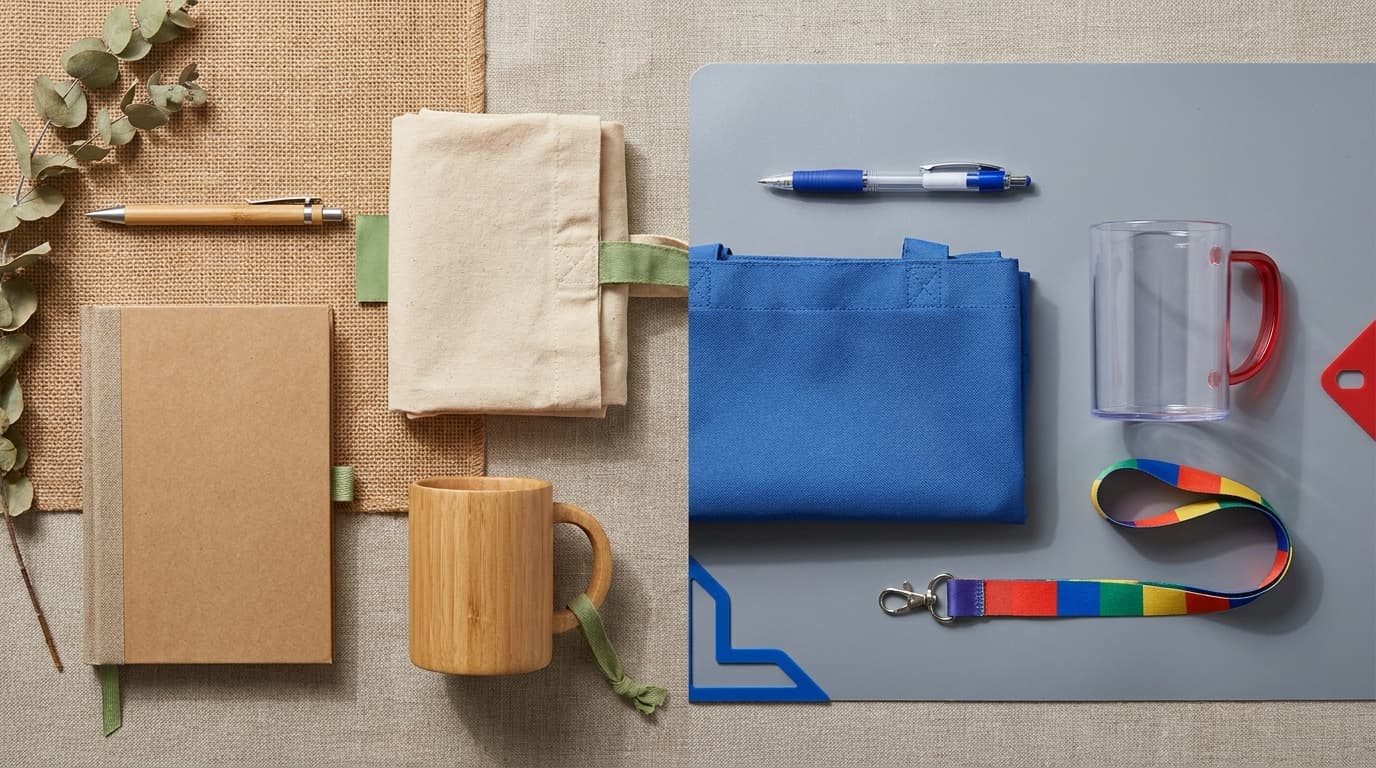
"Eco-friendly costs more" is one of the most repeated assumptions in promotional products buying — and it's one of the most outdated. We've been pricing both standard and sustainable merchandise for UK businesses for over 17 years, and the honest answer in 2026 is: it depends entirely on the category. In some product lines, eco-friendly options now cost the same as standard versions, or even less. In others, there's still a real premium worth understanding before you commit budget.
This guide breaks down actual UK pricing across the categories we quote most often — pens, drinkware, bags, lanyards and notebooks — so you can make an informed, budget-accurate decision rather than guessing based on outdated assumptions.
Why This Comparison Matters Right Now
With Q4 budgets being finalised and Christmas corporate gifting season approaching, procurement teams are under pressure to balance two things that used to feel like a trade-off: cost control and sustainability credentials. The good news is that the gap has narrowed significantly over the past few years as recycled plastics, bamboo and organic cotton have scaled up in supply, bringing per-unit costs down closer to (and sometimes below) their standard equivalents.
Roughly 77% of UK consumers say they're more likely to engage with a brand that demonstrates environmental responsibility, and promotional merchandise is one of the most visible ways to signal that — assuming the numbers stack up.
The Real Cost Comparison: Eco vs Standard, Category by Category
Branded Pens: Eco Often Wins on Price
Pens are the clearest example of how far eco-friendly options have closed the gap — in some cases they're now the cheaper choice:
- Standard plastic ballpoint pens — from £0.10–£0.11 per unit
- Recycled plastic pens (e.g. recycled ABS ball pens) — from £0.09 per unit, genuinely cheaper than virgin plastic
- Wheat straw eco pens — from £0.10 per unit, on par with standard
- Bamboo pencils — from £0.08 per unit, the cheapest writing item in our entire range
- Premium bamboo pens — £0.30–£0.60 per unit, a step up for client gifting
At entry-level price points, there's effectively no cost penalty for choosing bamboo or recycled pens over standard plastic. This is the single easiest swap for budget-conscious buyers wanting a quick sustainability win.
Branded Drinkware: Comparable at Equivalent Quality Tiers
Drinkware pricing depends more on material and finish than on whether a product is labelled "eco":
- Standard full-colour ceramic mugs — £3.30–£4.44 per unit
- Oak wooden mugs (eco) — from £3.00 per unit, actually undercutting standard ceramic
- Tritan Renew™ recycled bottles — £1.50–£4.50 depending on size, directly comparable to standard plastic bottle pricing
Browse the full eco-friendly mugs and bottles range or compare against our standard ceramic mugs to see current pricing side by side.
Branded Bags: Material Matters More Than "Eco" Status
This is where buyers most often get caught out by assuming "eco" automatically means "expensive":
- Basic standard tote bag — from £0.23 per unit (thin, low-weight cotton)
- Standard cotton gift bags — £0.37–£0.56 per unit
- Recycled RPET drawstring bags — from £0.45 per unit, only a small premium over standard cotton
- Recycled cotton bags (140gsm) — from £0.525 per unit
- Jute shopping bags — from £0.80 per unit (premium natural material)
- RPET tote bags — from £1.20 per unit (heavier-duty recycled construction)
The lesson here: a heavier, more durable RPET or jute bag will always cost more than the thinnest standard tote — but that's a fabric-weight difference, not an eco tax. Compare eco cotton bags against standard tote bags at matching weights and the gap mostly disappears.
Branded Lanyards: The One Category With a Real Premium
Lanyards are the clearest case where sustainable materials still carry a noticeable cost difference:
- Standard polyester lanyards — £0.21–£0.30 per unit
- Bamboo cotton lanyards — from £0.41 per unit (around 35–95% more than standard)
- Recycled PET lanyards — £1.05–£1.07 per unit (3–4x the standard price)
If budget is tight and lanyards are a high-volume item (conferences, events, staff ID), standard polyester remains the pragmatic choice. If lanyards are part of a brand campaign with a strong sustainability message, the eco lanyards range is worth the premium for the storytelling value alone.
Branded Notebooks: A Modest, Predictable Premium
- Recycled A6 notebooks — £0.465–£0.77 per unit depending on page count and extras
- Recycled notebook with pen set — from £0.77 per unit
Notebooks sit in the middle of the spectrum: recycled paper stock costs a little more than standard paper, but nowhere near the multiples seen with premium lanyards. Browse the full recycled and eco notebooks range.
Why the Price Gap Has Shrunk So Much
Three things have changed the economics of eco-friendly promotional products over the past few years:
- Scale. Recycled plastics (RPET, recycled ABS) and bamboo are now produced at a volume where manufacturers no longer need to charge a significant premium over virgin materials.
- Demand-driven investment. As more buyers request sustainable options, suppliers have invested in dedicated eco production lines, improving efficiency and lowering unit costs.
- Material substitution, not just addition. Many "eco" products — like recycled ABS pens — use waste plastic as a direct substitute for virgin plastic in the same manufacturing process, rather than requiring an entirely different (and costlier) process.
The Hidden Costs of "Cheap" Standard Products
A true cost comparison shouldn't stop at the unit price on the quote. A few things worth factoring in:
- Lifespan and perceived value. The cheapest standard items (sub-£0.15 pens, thin tote bags) often get discarded faster, pushing your effective cost-per-impression higher even though the sticker price is lower.
- Brand perception risk. A low-quality giveaway can occasionally do more harm than good if it feels disposable — especially for brands positioning themselves around quality or sustainability.
- Audience expectations. For sectors like education, healthcare, and consumer-facing retail, recipients increasingly notice and comment on sustainable packaging and merchandise choices.
How to Budget for Eco-Friendly Products Without Overspending
You don't need to convert your entire order to sustainable materials to make a genuine impact. A few practical approaches we recommend to clients:
- Start with the free wins. Swap standard pens for recycled or bamboo pens first — in most cases there's no cost increase at all.
- Prioritise your highest-visibility item. If budget only stretches to one eco swap, make it the item people see or use most (a tote bag, mug, or notebook), not the smallest giveaway.
- Mix standard and eco within the same order. Pair a standard polyester lanyard with a recycled notebook and bamboo pen, for example, to control total spend while still telling a sustainability story.
- Buy in bulk. Unit price gaps between standard and eco options shrink further at higher order volumes (250+ units), since setup and print costs are spread across more items.
Ordering Considerations
Minimum Order Quantities
Most eco-friendly and standard products in our range share similar MOQs, typically starting from 25–50 units, with better per-unit pricing from 100+ and 250+.
Lead Times
Eco-friendly materials generally print and produce on the same timelines as standard equivalents — typically 10–15 working days — though bamboo and wood items can occasionally run a few days longer due to lower stock turnover. Build in extra buffer heading into Q4, as both standard and sustainable ranges see higher demand ahead of Christmas.
Print Methods
Recycled plastics and standard plastics both support screen printing and pad printing. Bamboo, wood and cotton items typically use laser engraving or screen printing depending on the finish.
Frequently Asked Questions
Are eco-friendly promotional products always more expensive?
No. Pens, pencils and several drinkware options are now priced the same as, or lower than, their standard equivalents. The premium tends to appear in specific categories like lanyards and premium bags, where sustainable materials still cost more to source.
Which eco-friendly promotional product category has the smallest price gap?
Pens and pencils. Recycled ABS and wheat straw pens are priced within a penny or two of standard plastic pens, and bamboo pencils are among the cheapest items in our entire catalogue.
Which eco-friendly category has the biggest price gap?
Lanyards. Recycled PET lanyards can cost three to four times more than standard polyester lanyards, making this the category where budget-conscious buyers most often stick with standard options.
Is it worth paying more for eco-friendly products if budget is tight?
Not across the board — but prioritising one or two high-visibility eco swaps (a tote bag, notebook or mug) usually delivers most of the sustainability messaging benefit without blowing the budget on every line item.
Do eco-friendly products take longer to produce?
Generally no. Most eco ranges run on the same 10–15 working day lead times as standard products, though a small number of bamboo or wood items can take slightly longer due to lower stock turnover.
What's the minimum order quantity for eco-friendly promotional products?
Most items in our eco-friendly range start from 25–50 units, the same as standard equivalents, with volume discounts from 100+ units.
Can I mix standard and eco-friendly products in the same order?
Yes, and it's one of the most effective ways to manage budget — for example, pairing a standard lanyard with a recycled notebook and bamboo pen to control total spend while still including sustainable items.
Which print methods work on eco-friendly materials?
Recycled plastics support the same screen and pad printing as standard plastics. Bamboo, wood and cotton items typically use laser engraving or screen printing depending on the specific product and finish.
Why Choose PMP for Eco-Friendly and Standard Promotional Products?
At Positive Media Promotions, we've been supplying UK businesses with promotional merchandise for over 17 years, and we quote both standard and sustainable ranges side by side so you can see the real numbers before deciding:
- Transparent, like-for-like pricing — we'll always show you the eco and standard price for a category so you can compare directly
- Full range across both — from budget plastic basics to premium bamboo, recycled and organic cotton options
- Expert guidance — we help you prioritise which items are worth an eco upgrade and which aren't, based on your actual budget
- Volume pricing — competitive rates whether you need 50 units or 5,000
- Free UK delivery — on qualifying orders
- Reliable lead times — production planning that accounts for seasonal demand spikes
Whether you're switching your entire order to sustainable materials or just making a few targeted swaps, we'll help you get the balance right between budget and brand values.
Get Started Today
Ready to compare eco-friendly and standard pricing for your next order? Get in touch for a free quote, or browse our full eco-friendly promotional products range to see current pricing across every category.
Related Articles

Need promotional products?
Get a free quote from our team. We'll help you find the perfect products for your brand.
Get a Free Quote